


How Chongqing and Duisburg Plan to Move China-Europe Freight More Efficiently
29 October 2026
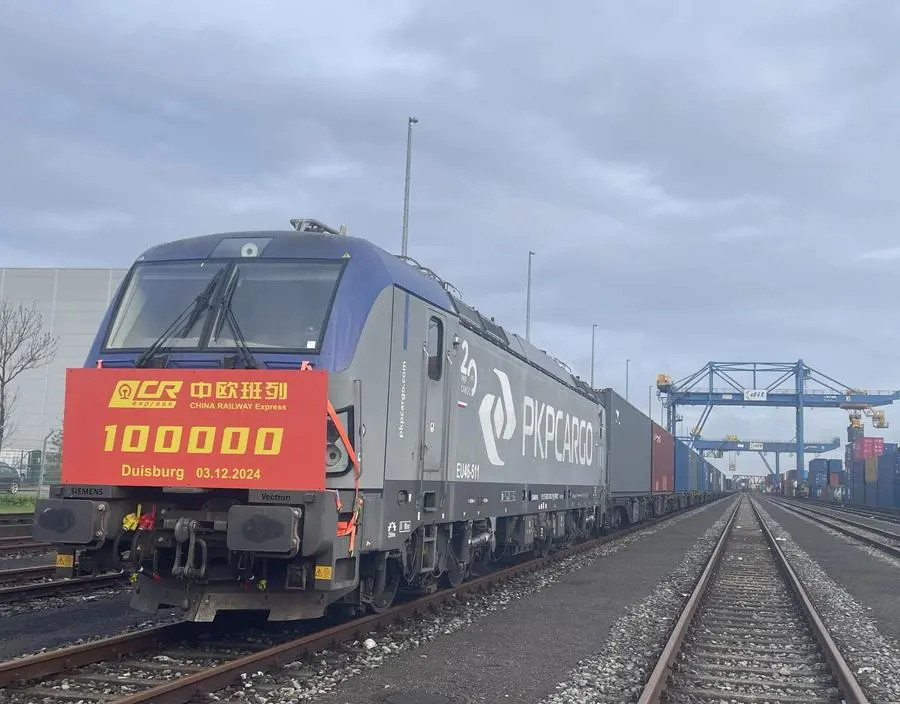 After more than a decade of building freight routes linking western China with Europe, Chongqing is shifting its focus from expanding transport infrastructure to making international logistics networks work more efficiently.
The shift is reflected in the country’s 15th Five-Year Plan (2026-2030) for integrated transport hub development, recently issued by several central government departments. The plan outlines three initiatives involving Chongqing.
The first aims to improve coordination between Chongqing and Duisburg, Germany, covering two-way China-Europe and China-Asia freight train services.
The second calls for regular shipping services linking Chongqing with Luzhou and Yibin in neighboring Sichuan province, supporting the development of an upper Yangtze River shipping hub.
The third focuses on expanding overseas warehouses and distribution centers for an international postal and express delivery network connecting Chongqing, Chengdu and Xi’an.
Duisburg, home to Europe’s largest inland port, has extensive rail and waterway connections.
Trains carrying goods from China to Europe may struggle to secure sufficient cargo for the trip back, making it harder to maintain balanced freight flows in both directions.
Another challenge arises after shipments reach Europe. Goods arriving by rail may still need to pass through several local logistics providers before reaching their final destinations. Each additional stage of handling, transfer or distribution can complicate delivery arrangements.
Under the new plan, closer coordination between Chongqing and Duisburg is intended to connect their cargo collection and distribution networks. On the European side, Duisburg’s established rail and waterway connections could help organize onward distribution of goods arriving from China while providing a stronger network for collecting Europe-origin cargo bound for China.